The Digital Frontier: Navigating the 2026 Marketing Landscape for New Zealand Businesses
For years, New Zealand businesses have prided themselves on quality and connection, but a massive shift is underway. As we navigate 2026, the question for Kiwi enterprises is no longer if they should be digital-first, but how they can refine their presence to stand out.
From the bustling streets of Auckland to the vineyards of Marlborough, the standard for success has changed. Consumers expect seamless, personalized, and efficient interactions, forcing businesses to rewrite their marketing playbooks.
The Core Challenges Facing Kiwi Enterprises
The primary hurdle for many New Zealand businesses isn't a lack of desire, but a lack of specialized expertise. A common challenge is implementing sophisticated data-driven strategies—like hyper-personalization—which requires technical skills that many small to medium-sized enterprises (SMEs) struggle to access locally.
Furthermore, building and managing a modern, agile website that truly captures a brand's essence, while ensuring it is optimized for mobile search, remains a complex and time-consuming process. These gaps mean that many businesses are operating at only a fraction of their digital potential.
The 2026 Kiwi Marketing Toolkit
To thrive, a New Zealand business in 2026 must be proactive. The most effective digital marketing plans now prioritize four pillars that directly address these challenges:
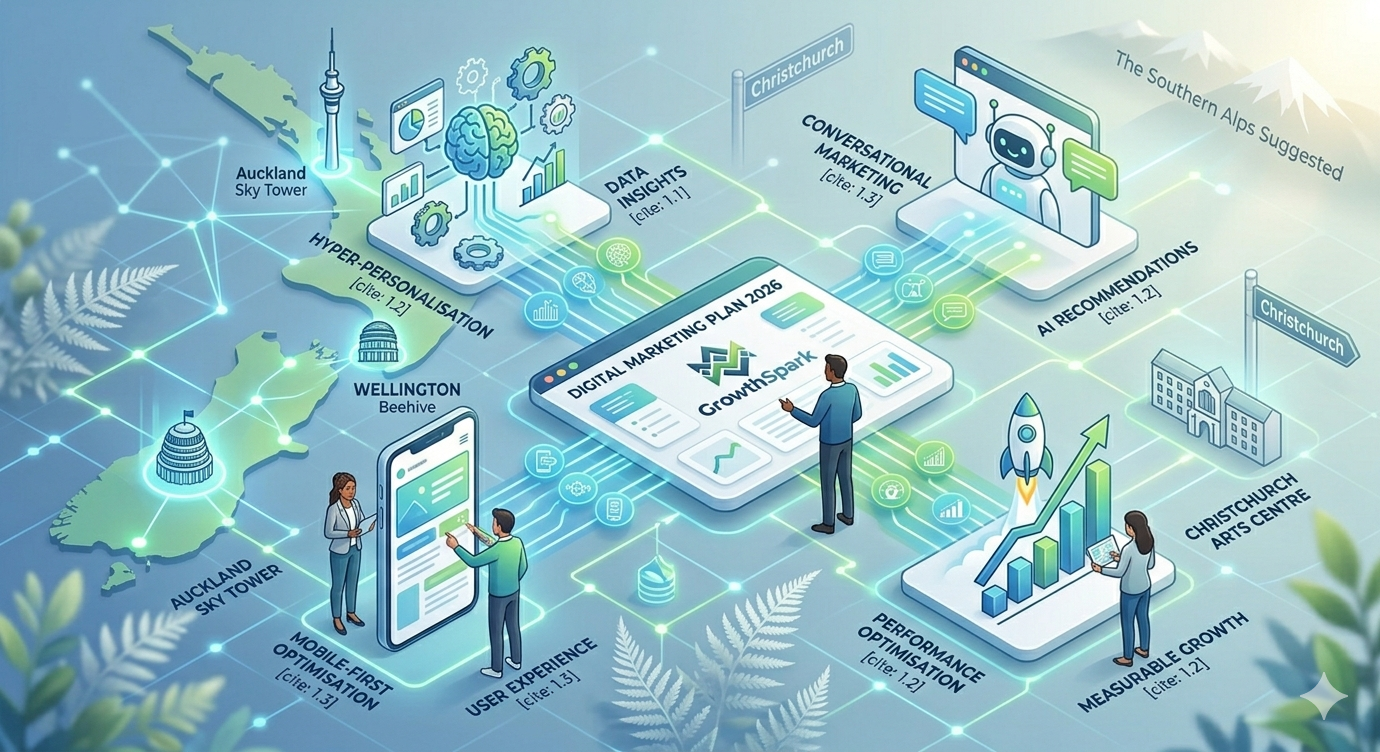
- Data Intelligence & Hyper-Personalization: Moving beyond basic demographics, businesses must use behavioral data to predict user needs. For example, a tourism operator should serve different offers to a 'solo adventure seeker' than a 'family of four', automating these journeys based on real-time interactions. While technically demanding, this approach is the new standard.
- Conversational Marketing (Chatbots & AI): Kiwi consumers value timely communication, but they also appreciate efficiency. Modern marketing plans increasingly include conversational AI. Advanced chatbots—integrated directly into websites or social media—can provide instant answers to standard queries, freeing up human resources for complex issues. These AI systems can offer personalized product recommendations, significantly improving conversion rates.
- Mobile-First Optimization: A robust digital presence is built on a flawless mobile experience. Given that the majority of traffic now originates on mobile, websites must be lightning-fast and intuitive. This isn't just about responsiveness; it's about optimizing for "thumb-friendly" interaction, ensuring speed, and creating frictionless pathways to purchase.
- Performance Transparency & Optimization: Successful plans are iterative. Marketing teams must prioritize measurable results, moving beyond vanity metrics. They must use real-time analytics to understand campaign performance, allowing them to shift budgets and strategies instantly. This requires a dedicated focus on measurement and a willingness to continuously test new ideas.
The Pathway Forward
Thriving in the digital frontier requires New Zealand businesses to bridge the gap between their current capabilities and the new market realities. While the technical demands are significant, the tools—from AI-driven insights to automated conversational marketing—are more accessible than ever.
A modern digital marketing plan isn't a cost; it's the essential engine that amplifies your unique value and connects you to a global audience. By prioritizing data, personalization, and seamless mobile interaction, Kiwi businesses can turn digital potential into measurable growth, ensuring their stories resonate far beyond New Zealand’s shores.